


(Noviembre 10, 2025)
¿Cómo ganó Zohran Mamdani la alcaldía de Nueva York, la ciudad más grande de Estados Unidos y, para algunos, la capital del mundo? Para muchos votantes, Mamdani es el anti-Trump. Y este país está buscando a alguien que lo ayude a salir del hoyo antidemocrático, vengativo, pesimista y de persecución en que nos ha metido el presidente de Estados Unidos.
Mamdani es todo lo que Trump no es: joven -tiene 34 años-, socialista demócrata, musulmán, inmigrante y con una visión mucho más generosa de lo que debe ser un gobernante. Mamdani ve hacia fuera, a los otros, mientras que Trump solo se ve a sí mismo.
Mamdani casi siempre está sonriendo; Trump casi nunca. Esto nos recuerda que las elecciones se ganan proponiendo un futuro mejor, no solo atacando lo malo de tu contrincante. Me hizo acordar el eslogan de “la alegría ya viene” con que los chilenos sacaron al dictador Augusto Pinochet en el plebiscito de 1988.
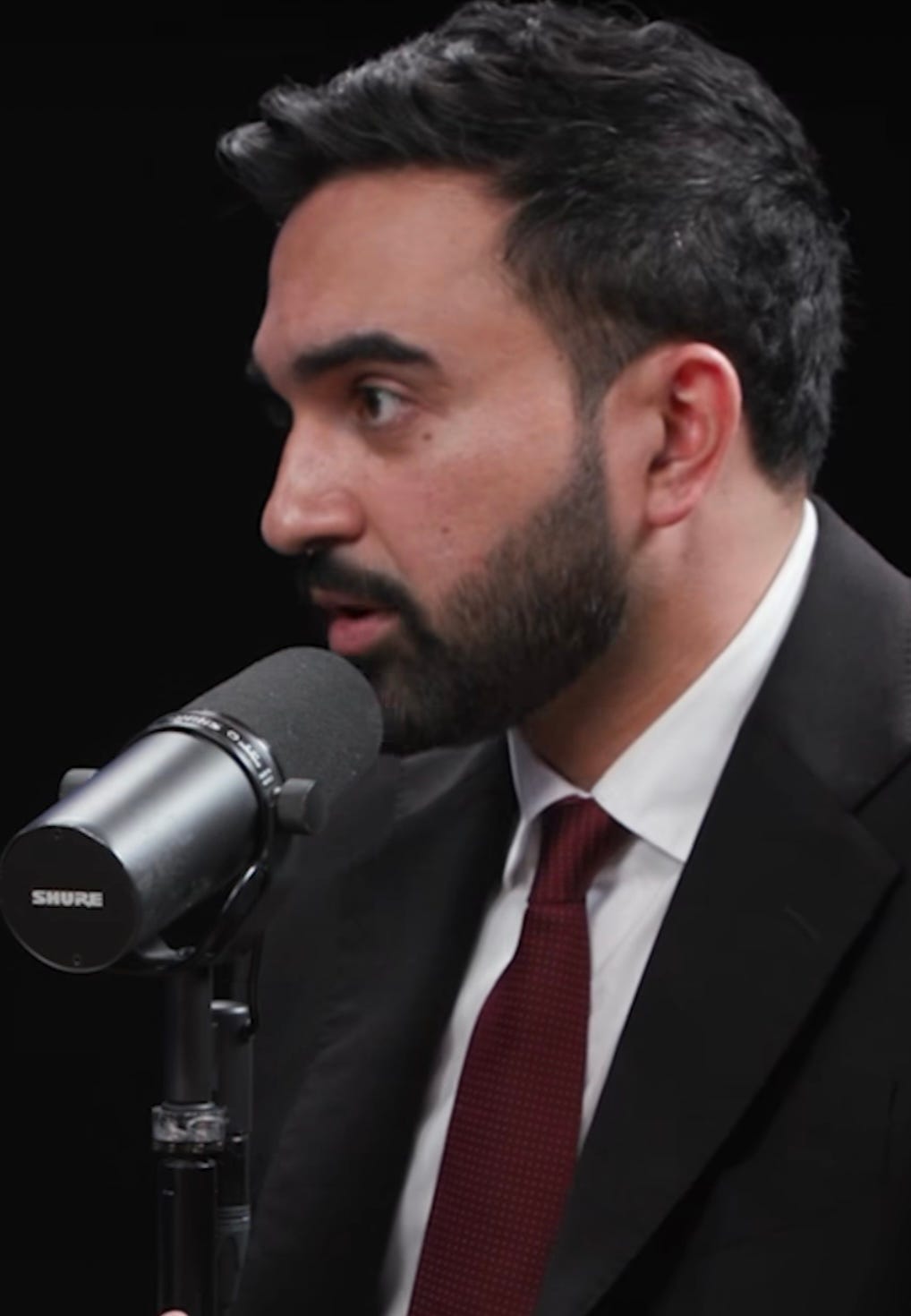
La campaña de Mamdani en redes sociales estuvo llena de momentos virales, auténticos, sin actuación, a pesar de su permanente uniforme de traje negro, camisa blanca, corbata de rayas y barba oscura bien recortada. Lo vimos bailar, comer, subirse al metro, saludar a los corredores del maratón y explicar una y mil veces su mensaje central: hay que hacerles la vida más barata a los neoyorquinos -en la renta, la comida, el transporte y el cuidado infantil- para que no se vayan a otro lado.
La victoria de Mamdani- junto al de las candidatas Demócratas a las gubernaturas en Nueva Jersey y Virginia, y a la aprobación de la proposición 50 en California- le ha dado al partido Demócrata su mejor noche desde que Joe Biden le ganó las elecciones presidenciales a Trump en el 2020. La resistencia a Trump se ha levantado. Solo en Nueva York, por ejemplo, más de un millón de votantes apoyó a Mamdani.
El triunfo de Mamdani fue un claro rechazo a las políticas trumpistas, a las inhumanas redadas y a una situación económica que no acaba de despegar. Es increíble que en el país más rico y poderoso del mundo haya 42 millones de personas que necesitan cupones de alimentos para sobrevivir, y que su gobierno se resista a pagarlo.
Pero ¿quién es Zohran Mamdani, cómo ganó y en qué cree?
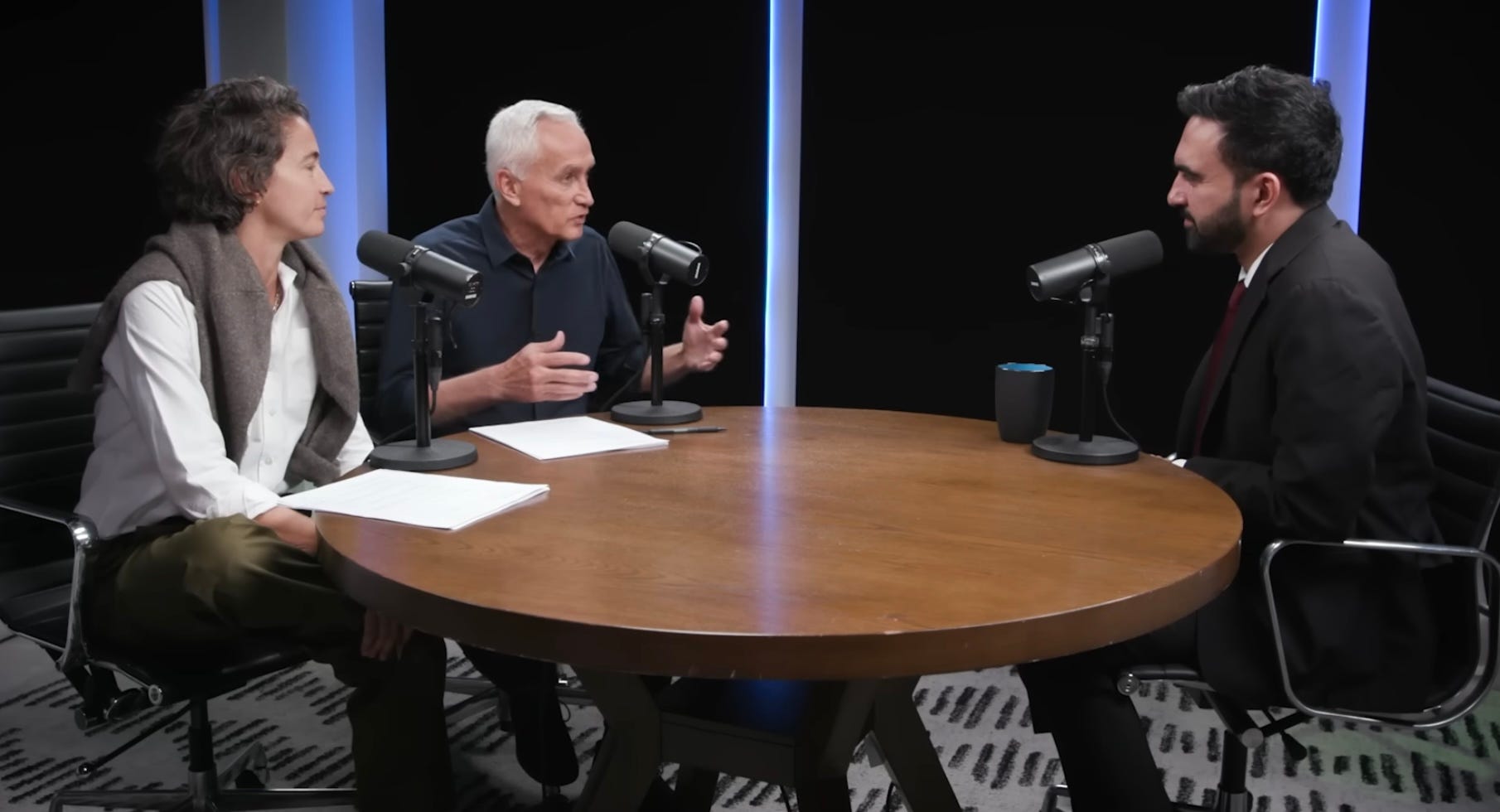
Hace unas semanas mi hija Paola y yo lo entrevistamos en Nueva York para un podcast que estamos haciendo en inglés llamado “The Moment”[i]. Y ahí lo conocimos un poco más. Nació en Uganda pero llegó a Nueva York con sus papás de la India a los siete años. “Soy un inmigrante, definitivamente siento mi identidad de migrante”, nos dijo[ii]. “Nueva York es una celebración de la cultura del inmigrante…y no te pide que cedas una parte de ti para ser parte de ella”.
¿Cuál fue su estrategia para conseguir votos? “Creo que lo primero es escuchar”[iii], nos contestó. Y quiso saber por qué algunos Latinos habían votado por Trump en la pasada elección. “Una y otra vez me dijeron que por los altos costos (de vivir en Nueva York)”[iv]. Mamdani rápidamente entendió que su campaña tenía que concentrarse en cosas concretas -congelar las rentas, bajar el precio de la comida…- más que en temas ideológicos o políticos. “No lo vi como que todos estaban contra mí. Lo vi como ir en contra de las políticas del pasado”[v]. Así ganó.
Mamdani será el primer alcalde musulmán en la historia de una ciudad que, después de los ataques terroristas del 9/11, sufrió -al igual que el resto del país- varios incidentes de islamofobia. Pero de sus abuelos aprendió que “ser un buen musulmán es ser buena persona, ayudar a los que lo necesitan y no dañar a nadie”.[vi]
Sobre su socialismo democrático, y parafraseando a Martin Luther King, nos comentó que “debe haber una mejor distribución de la riqueza para todos los hijos de Dios en este país”[vii]. Añadió que de nada sirve decir que Nueva York es la mejor ciudad del mundo si no tienes suficiente dinero para vivir en ella.
El único momento en que lo vi titubear durante toda la entrevista fue cuando le pregunté si le llamaría “dictadores” a los líderes de Cuba y Venezuela. Esa sería una forma de diferenciar su socialismo democrático del régimen represivo que caracteriza a los tiranos Miguel Díaz-Canel y Nicolás Maduro. Pero no lo dijo durante nuestra conversación. ¿Por qué está renuente a llamarles dictadores? Le pregunté. “No estoy reacio a hacerlo”, respondió. “Es solo que no he pensado en ellos tan seguido, para ser honesto contigo”[viii]. (Días después de la entrevista, la campaña de Mamdani nos envió un comunicado en el que sí le llamaba dictadores a Díaz-Canel y a Maduro.)
Cuando Mamdani tome posesión como alcalde de Nueva York a principios del 2026, tendrá dos grandes retos: manejar un complicadísimo presupuesto de 116 mil millones de dólares[ix] para ocho millones y medio de habitantes[x], y enfrentarse al presidente Donald Trump, quien lo ha llamado “mi pequeño comunista”[xi].
Los inmigrantes que viven en Nueva York serán el primer punto de tensión entre el presidente y el nuevo alcalde. Será Trump contra el anti-Trump. Nueva York es, oficialmente, una ciudad santuario. Esto significa que su policía local no coopera con los agentes migratorios de ICE. Pero Trump seguramente insistirá en enviar a elementos de la Guardia Nacional a Nueva York o a reforzar la presencia de ICE. Y esto puede causar terror en una ciudad donde “hay 400 mil personas en peligro inmediato de deportación”, según nos dijo Mamdani[xii].
La entrevista terminó como un aterrizaje muy suave, en un viaje con poca turbulencia.
¿Siente el joven Mamdani el enorme peso de lo que viene? Antes de despedirse nos dijo que no lo sentía como “una carga”. ¿La razón? Como siempre, la familia. “He tenido mucha suerte de que mis padres me han apoya increíblemente; siempre me han apoyado cuando ven la pasión en mis ojos”[xiii]. Esos ojos son los que, muy pronto, dirigirán Nueva York.
========
MAMDANI: THE ANTI-TRUMP
November 10, 2025
How did Zohran Mamdani win the race for mayor of New York, the biggest city in the United States and, for some, the capital of the world? For many voters, Mamdani is the anti-Trump. And this country is looking for someone to help it out of the anti-democratic, vengeful and pessimistic hole the president of the United States has dug for us.
Mamdani is everything that Trump is not: Young – he’s 34 – a socialist democrat, Muslim immigrant and with a much more generous vision of what a ruler should be. Mamdani looks outside, to the other, while Trump sees only himself.
Mamdani is almost always smiling. Trump almost never. That reminds us that elections are won by proposing a better future, not just by attacking the bad side of your opponent. He reminds me of the slogan, “Happiness is coming” that Chileans used to push out dictator Augusto Pinochet during the 1988 plebiscite.
Mamdani’s social media campaign was full of viral moments, authentic, with no acting, despite his permanent uniform of black suit, white shirt, striped tie and a well-trimmed dark beard. We saw him dance, eat, get on the subway, wave at marathon runners and explain, over and over again, his central message: the costs of living for New Yorkers must be cut – rent, food, transportation and child care – to keep them from moving out.
His victory – alongside those of the Democratic candidates for governor of New Jersey and Virginia and the approval of Proposition 50 in California – gave the Democratic Party its best night since Joe Biden beat Trump in the 2020 presidential elections. The resistance to Trump has woken up. Just in New York, for example, more than 1 million voters supported Mamdani.
His win was also a clear rejection of Trump policies, the inhumane immigrant raids and an economy that seems to have stalled. It is incredible that the wealthiest and most powerful country in the world has 42 million people who need food coupons to survive, and that its government refuses to pay for them.
But who is Zohran Mamdani, how did he win and what does he believe?
A couple of weeks back my daughter Paola and I interviewed him in New York for a podcast we’re producing in English, The Moment. And we got to know him a little bit there. He was born in Uganda of Indian parents and arrived in the US at the age of 7. “I am an immigrant. I definitely feel my immigrant identity,” he told us. “New York City is a celebration of immigrant culture … What I love about this place is it doesn’t ask you to give up any of yourself to become a part of it.”
What was his strategy for winning votes? “I think the first thing is by listening,” he replied. And he asked some Latinos why they voted for Trump in the past elections. “And again and again, it came back to the cost of living” in New York City. He quickly understood that his campaign had to focus on concrete issues – freezing rents, lowering food costs – rather than ideology or politics. “No, I don’t see it as everyone against me. I see it as running against the politics of the past.” That’s how he won.
Mamdani will be the first ever Muslim mayor of a city that after the 9/11 terrorist attack suffered – like the rest of the country – several incidents of Islamophobia. But his grandparents taught him, he said, “that to be a good Muslim is to be a good person. It’s to help those in need and harm no one.”
Asked about his brand of democratic socialism, he paraphrased Martin Luther King when he said, “There must be a better distribution of wealth for all of God’s children in this country.” It means nothing to say that New York is the best city in the world, he added, if you don’t have enough money to live there.
The only time I saw him waffle a bit during the entire interview came when I asked him if he would brand the leaders of Cuba and Venezuela as “dictators.” That would allow him to differentiate his brand of socialism from the type that Miguel Díaz-Canel
and Nicolás Maduro claim to follow. He did not. “Why are you reluctant to call them dictators?” I asked him. “I’m not reluctant, I just haven’t thought about them that often, I’ll be honest with you.” Days after the interview, Mamdani’s campaign sent us a statement in which he did brand Díaz-Canel and Maduro as dictators.
When Mamdani is sworn in as mayor of New York on January 1st, he will face two big challenges: manage a singularly complex city budget of $116 billion for 8.5 million people, and joust with President Donald Trump, who has called him “my little communist.”
Immigrants who live in New York will be the first point of contention between the president and the mayor. It will be Trump against the anti-Trump. New York is officially a sanctuary city. That means its police do not cooperate with ICE, the federal immigration agents. But Trump will almost certainly insist on sending National Guard units to New York or reinforcing the ICE presence in the city. And that could unleash terror in a city that has “400,000 people in immediate danger of deportation,” according to what Mamdani told us.
The interview ended with a soft landing, after a flight with little turbulence.
Does the young Mamdani feel the enormous weight of what’s coming? He said he did not see it as “a burden.” Why not? As always, the family. “I was really lucky in that my parents have been incredibly supportive. And they’ve been supportive whenever they see that passion in my eyes.”
Those are the eyes that will very soon guide New York.
[i]
Un aire nuevo para NY